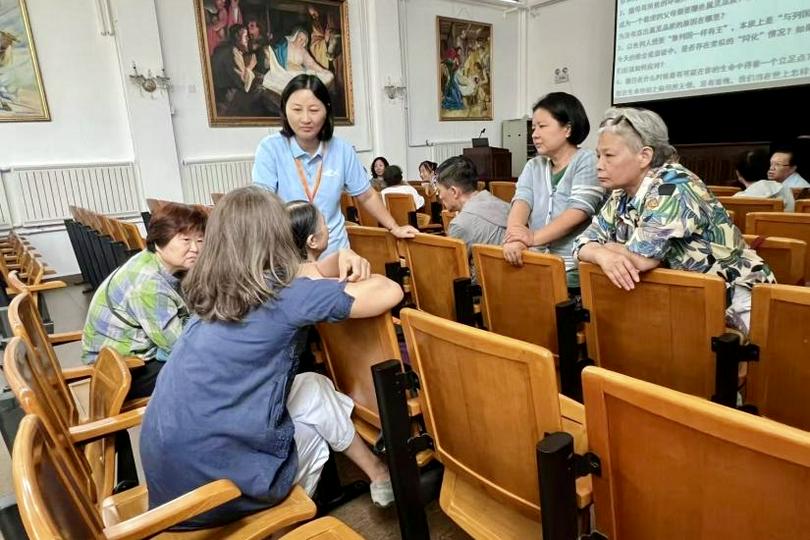
Many medium-sized churches in China face a common challenge: a large congregation, ranging from several hundred to several thousand members, but only a handful of pastors. With such a ratio, it is nearly impossible for pastors to meet the spiritual and practical needs of every believer. As a result, members often lack continuous care outside of Sunday worship, feeling isolated within the community.
To address this, numerous churches have begun implementing a "small group pastoral care" model, aiming to ensure that every believer is seen and supported. I recently visited a church practicing this approach.
This church traces its origins to a couple who once hosted meetings in their home. Last year, the congregation moved into a new building designed to facilitate small group ministry, featuring several fellowship rooms on the ground floor, each with its own distinctive name.
The church regards small groups as the core of its pastoral care. Regular fellowship sessions are held every Wednesday and Friday morning from 8:30 a.m. to 10:00 a.m. To facilitate communication, believers are divided into six "Grace Groups" according to their residential areas, and each member wears a unique name tag. This system goes beyond administration: if a name tag is missing, the group leader can immediately identify the absent member and arrange timely visits or follow-ups.
Meetings typically begin with a sermon delivered by the pastor. After 9:30 a.m., members disperse into different rooms to discuss the sermon, share daily experiences, or support one another through personal challenges. Newcomers are not pressured to form bonds through the group structure immediately; instead, they are given special seating and a welcoming environment, allowing them to acclimate at their own pace.
A reception staff member explained, "The goal of the small group is to help believers know who to turn to when they face difficulties." She emphasized that many spiritual challenges require long-term companionship and guidance.
A highlight of the small group pastoral care is its prayer sessions. When a member requests prayer, the entire group prays specifically for that individual. These shared moments of unity allow believers to genuinely experience what it means to love one another, leaving behind many testimonies.
However, implementing small group ministry also presents challenges. One co-worker openly described several internal difficulties. The first is communication barriers: some believers hesitate to share because they struggle to understand the sermons, or are naturally introverted. The second involves interpersonal tensions. Closer interaction inevitably leads to conflict, requiring group leaders to resolve issues with wisdom and biblical guidance. Most painful of all is a sense of shame. Believers suffering from long-term illness, those who have been unwell for a year or two without improvement, often feel embarrassed to request prayer. Strengthening the faith of these more vulnerable members remains a serious test for the pastors.
Beyond internal issues, a structural generation gap is difficult to avoid. Because fellowship gatherings take place on weekday mornings, most attendees are over 60 years old. A young shop owner once tried to join; even with a flexible schedule, she eventually left due to the huge age difference, finding herself surrounded almost entirely by elderly members.
The church is aware of the shortage of young participants. In response, the senior pastor plans to launch a "youth group" after Sunday services and introduce a marriage counseling ministry to meet the diverse needs of different age groups.
Despite the many challenges, the church remains convinced that only when corporate worship is integrated with the close relationships formed in small groups can a congregation become a truly healthy community.
Originally published by the Gospel Times
- Edited by Katherine Guo and translated by Poppy Chan