"Did you know that the Chinese Bible is peppered with Shandong dialect?"
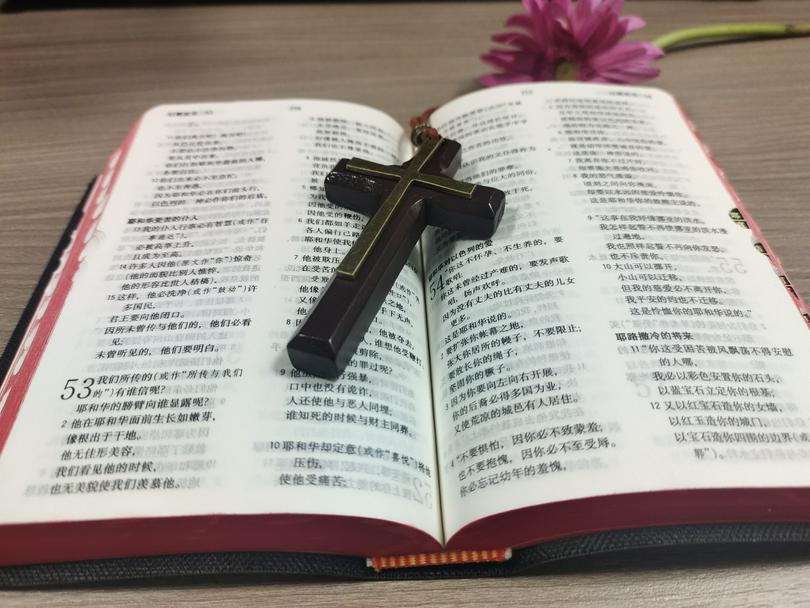
Brother Li, a Christian artist based in East China, has uncovered a surprising linguistic lineage about the Chinese Bible: many of the scriptural terms now considered standard in the Chinese Union Version (CUV) actually originated from the colloquial speech of Shandong province.
According to Li, who has collected historical archives and studied various editions of the Chinese Bible for years, the evidence is scattered from Genesis to Revelation. "I can find over a hundred sentences with a distinct 'Shandong flavor,'" Li said. "It's almost amusing when you realize it."
He points to the Great Commission, where Jesus promises to be with his disciples "until the very end of the age." The Chinese phrase used for "the end"—moliao—is a quintessential Shandong colloquialism meaning "to reach the limit" or "the very end."
While it may sound like a linguistic coincidence, Li explains that there is a historical reason behind this phenomenon. When Protestant missionaries like Robert Morrison began the arduous task of translating the Bible in the early 19th century, they faced significant hurdles: there were no comprehensive dictionaries and no standardized national spoken language. To navigate these challenges, missionaries hired Chinese assistants, some of whom hailed from Shandong.
"The translation process was a collaboration between foreigners and Chinese locals," Li explained. "Many of these Chinese assistants were not scholars of Classical Chinese or theology; they simply used their daily vernacular to help the missionaries interpret the text." Consequently, local idioms such as ritou (sun), babude (eagerly desire), dafa (to dispatch), and huichuai (to carry in one's bosom) found their way into the manuscripts. These terms were preserved through generations of revisions and eventually canonized in the CUV, which remains the most popular Chinese translation today.
"If these words feel natural to you now," Li said, "it's only because the Bible has successfully transitioned them from regional dialect into the mainstream lexicon."
Beyond regional trivia, Li argues that this translation process played a foundational role in shaping modern Chinese, drawing a parallel to how Martin Luther's Bible translation established the foundation of modern German. Long before the New Culture Movement of 1919 popularized vernacular writing (Baihua), Bible translators were already bridging the gap between classical scripts and the spoken word.
Li highlighted that a vast array of modern political and sociological terminology—words like "society" (shehui), "freedom" (ziyou), "value" (jiazhi), "history" (lishi), "news" (xinwen), and "justice" (gongzheng)—were coined or popularized by Bible translators in the late 19th and early 20th centuries.
Before this linguistic shift, Li explained, the Chinese language relied heavily on single-character words. It was the necessity of translating the Bible that introduced compound words capable of expressing abstract, modern concepts in Chinese.
"Robert Morrison simply wanted to translate God's word into Chinese," Li remarked, "but he unintentionally rewrote the entire mode of Chinese expression."
Reflecting on the philosophical implications, Li cited Ludwig Wittgenstein's famous maxim: "The limits of my language mean the limits of my world."
He contended that while Chinese culture has traditionally viewed language as a tool for communication, Western linguistics and philosophy view it as a structure of culture itself. This shift is visible in the life of a believer, Li observed.
After converting to Christianity, a person's speech often changes—anger and cursing are replaced by gentleness and humility—demonstrating that a language change is an external manifestation of an internal life renewal.
He noted that the arrival of missionaries brought not just a book but the "seeds of modern civilization," including the printing press, journalism, and modern education. In Li's view, China's entry into modern history is inextricably linked to the introduction of the Bible and the subsequent renewal of language.
Li also reflected on the unique era in Chinese linguistic history when the Bible was translated into as many as 16 different dialects, including Shanghainese, Cantonese, Hakka, and Fuzhou dialect.
"It was like a linguistic museum," Li said.
These vernacular versions were a testament to the localization of faith. While the Beiyang government established a Commission on the Unification of Pronunciation in 1912, and the use of Putonghua was promoted in the 1950s, the language of the Bible had already been subtly shaping the written system for decades.
In the dual process of spreading faith and unifying the language, the biblical text served as a "gentle seed" in the soil of modern Chinese history.
Originally published by the Christian Times
- Edited by Katherine Guo