
On December 27, the memorial hall and statue honoring Y. T. Wu (Wu Yao-tsung) (1893–1979), initiator of the Three-Self Patriotic Movement of the Protestant churches in China, were officially inaugurated in Guangzhou, Guangdong.
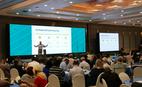
The dedication was held alongside an academic symposium themed "Religious Faith in a Transformative Era," bringing together more than 70 scholars from leading universities and research institutes—including the Chinese Academy of Social Sciences, Fudan University, and Shandong University—as well as pastors and church leaders, said Guangzhou CC&TSPM. Participants engaged in in-depth dialogue on Y. T. Wu's legacy and the contemporary practice of the sinicization of Christianity.
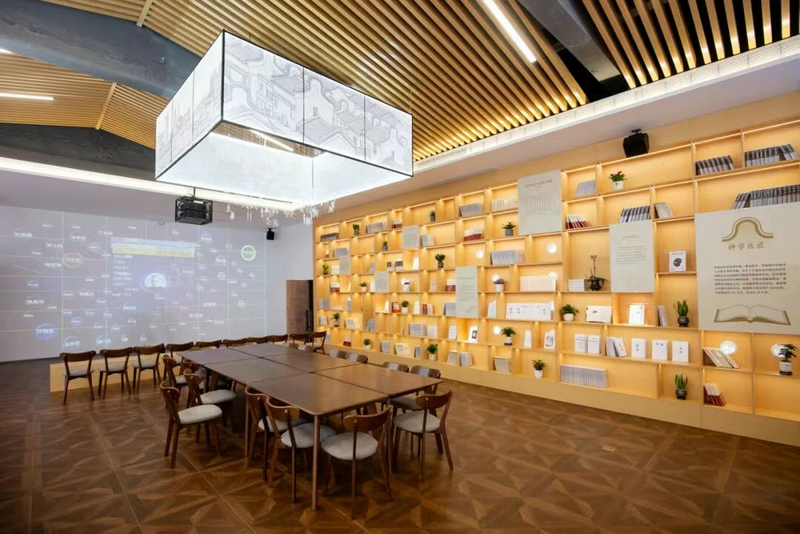
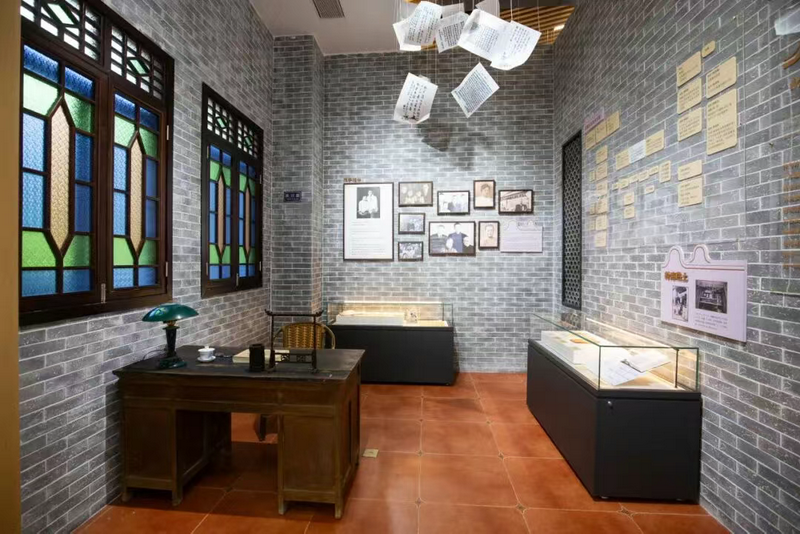
Y. T. Wu was a pivotal figure in the development of the Three-Self Patriotic Movement. The newly opened memorial hall features a thematic exhibition titled "Religious Faith in a Transformative Era," presenting his life and witness through rare historical documents, original publications, and interactive multimedia displays. Together, these materials portray a model of one who embodied both love for the nation and devotion to the church.
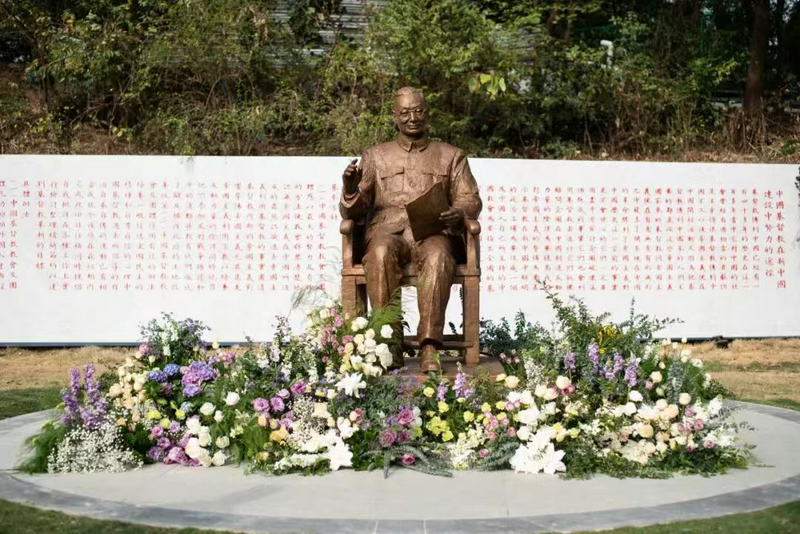
Unveiled at the same time, a statue of Y. T. Wu, created by renowned sculptor Ji Feng, captures not only his likeness but also his reflection and courage amid social transformation. The sculpture now stands as a visual symbol for the Guangzhou church, linking the spiritual heritage of earlier generations with the calling of the present.
In his address, Rev. Guo Yun, chairperson of Guangzhou Municipal TSPM, noted that the memorial hall and statue represent a significant outcome of Guangzhou's ongoing efforts to advance the sinicization of Christianity and are intended to serve as a platform highlighting the legacy of Christian pioneers within Lingnan culture.
At the subsequent symposium, scholars moved beyond purely historical assessment to explore Mr. Wu's thought as a continuing source of vitality for contemporary theological reflection.
Researcher Zhuo Xinping of the Chinese Academy of Social Sciences observed that Wu pioneered efforts to explore the possibility of dialogue and integration between Christianity and socialism—and later communism. He advocated renewing Christianity by adapting to the development of socialist society and engaging seriously with Chinese cultural heritage to become a Christianity rooted in China. At the event, Zhuo donated volumes from the "New Essays on Religious Studies" Series to the memorial hall.
Prof. Xu Yihua of Fudan University suggested that the Guangzhou church make full use of the Y.T. Wu's Research Center by advancing oral history projects and database development, building a distinctive academic profile, and cultivating talents who are proficient in both classic doctrines and Chinese traditional culture.
Several participants emphasized that Wu Yaozong's Three-Self principles—self-governance, self-support, and self-propagation—should be understood as a dynamic and evolving process. Prof. You Bin of Minzu University of China traced how Wu translated the Christian teaching of love into motivation for participation in the building of the New China.
Rev. Xu Lunsheng, vice president of CCC, proposed that Chinese Christianity today should develop its theological construction along three dimensions: political identification, cultural integration, and social adaptation.
Prof. Zhang Zhigang of Shandong University and Rev. Wang Jun, vice president of CCC, agreed that Mr. Wu was not only a committed patriot but also a serious Christian thinker. In the context of a new era, they noted, carrying forward his emphasis on independence and responsible self-governance remains an inner necessity for the church's high-quality development and its contribution to Chinese modernization.