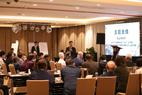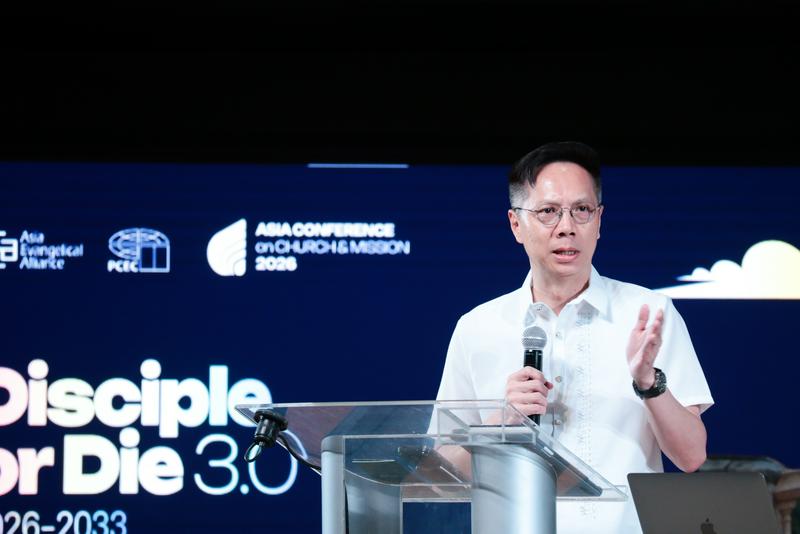

Ezekiel Tan, general secretary of the World Chinese Christianity Alliance (WCA), joined evangelical leaders from across Asia at the Asia Conference on Church and Mission 2026, where he led a closing prayer during a session calling churches to recover disciple-making as the central task of Christian mission on June 10.
The conference, held from June 9 to 12 at GCF South Metro in Alabang, Metro Manila, gathers Christian leaders, pastors, theologians, and mission practitioners from across Asia and beyond under the theme "Disciple or Die 3.0." Organized by the Asia Evangelical Alliance (AEA) in partnership with the Philippine Council of Evangelical Churches, the gathering focused on helping churches move from event-centered ministry toward a renewed commitment to forming disciples who make disciples.
Tan, who also serves as general secretary and CEO of the Bible Society of Singapore, vice-chairman and general secretary of the Evangelical Alliance of Singapore, and special envoy of the World Evangelical Alliance (WEA) to China and Chinese territories, was invited to close the session in prayer after a series of reflections and presentations on the future of disciple-making in Asia.
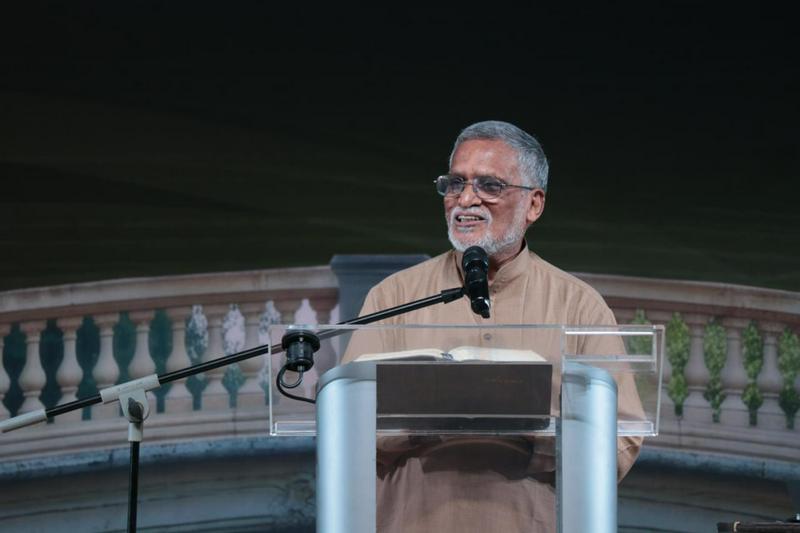
The session opened with a biblical reflection by Indian evangelical leader Rev. C. B. Samuel, who challenged participants to return to the Gospels in order to recover the meaning of authentic discipleship. Speaking from the Gospel of Luke, Samuel said the church must look again at how Jesus formed his disciples, rather than allowing the word "discipleship" to take on meanings far removed from its biblical origin.
Samuel said Jesus' discipleship began in public ministry before it became a private call to follow him. Referring to Jesus' ministry in Luke 4, he noted that Jesus was visible in the public space and that people knew what he stood for before he called disciples to join him. For the church in Asia, Samuel said, discipleship cannot be reduced to internal programs within church walls. Churches must become visible and meaningful voices in public life if they are to call others into a life of following Christ.
He also warned that many churches misunderstand young people by assuming they mainly need entertainment. Across Asia, he said, young people have shown that they are willing to respond to meaningful causes and social challenges. Churches should therefore not simply try to keep youth occupied, but should invite them into serious engagement with the world and the mission of God.
Samuel further urged Asian churches to "decolonize" their understanding of mission and discipleship. He said churches often borrow inherited or imported models of worship and mission without asking whether they reflect the way of Jesus. Warning against comfortable ministry and "fast food" approaches to short-term mission, he said true discipleship requires long-term presence, suffering, and a willingness to live and die with the people one is called to serve.
In this sense, Samuel said, the conference theme "Disciple or Die" should remind churches that disciples themselves must first die to self, or the church will die. True discipleship, he said, is not merely counseling, mentoring, or helping someone improve existing skills, but a call that changes the whole direction of a person's life and summons them to God's purpose.
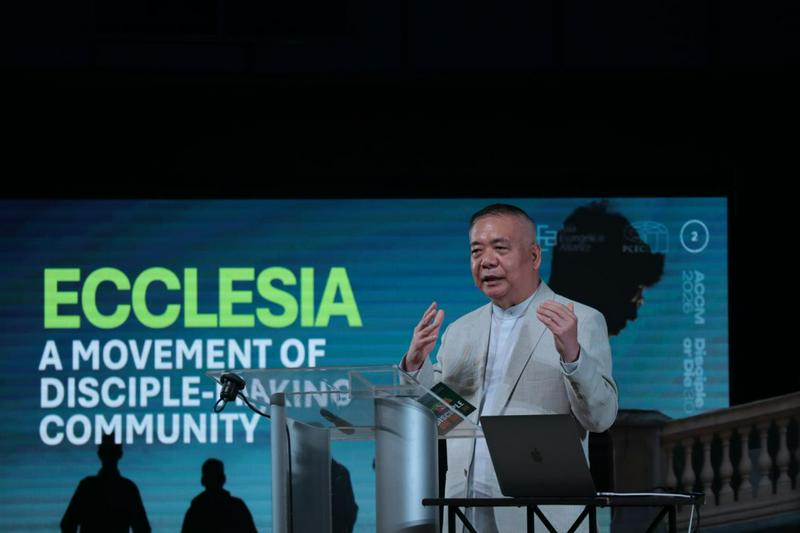
Following Samuel's message, Dr. Bambang Budijanto, general secretary of the AEA, expanded the discussion by presenting a strategic framework for disciple-making churches across Asia.
Budijanto said the church, or "ecclesia," should be understood not merely as a weekly gathering but as a movement of disciple-making communities. While churches may gather every Sunday for worship and teaching, he said the church Jesus intended is designed to move. "Only the church can stop the church," he told participants, stressing that no external force can ultimately stop the church when it is moving according to Christ's mission.
Reflecting on the Great Commission, Budijanto said the central imperative in Matthew 28 is to make disciples. Going, baptizing, and teaching all serve that central command. He warned that many churches have treated evangelism as an emergency task while neglecting the urgent, long-term work of forming people into Christlikeness.
Budijanto also introduced the Disciple-Making Church Advancement Record, or DCAR, a digital platform intended to help churches and alliances track, encourage, and recognize disciple-making commitments. He said a local church may be considered a disciple-making church if at least 20 percent of its members are actively discipling others. At the denominational level, the proposed benchmark is that 30 percent of local churches become disciple-making churches. At the national alliance level, 40 percent of denominations would be disciple-making denominations, while the broader Asian goal is for 50 percent of national evangelical alliances to become disciple-making alliances.
These benchmarks, Budijanto said, are meant to help churches ask not only how many members, buildings, staff, or funds they have, but how many disciples and disciple-making churches they are producing. He encouraged churches, denominations, and national alliances to use the platform as a tool for accountability, encouragement, and shared learning.
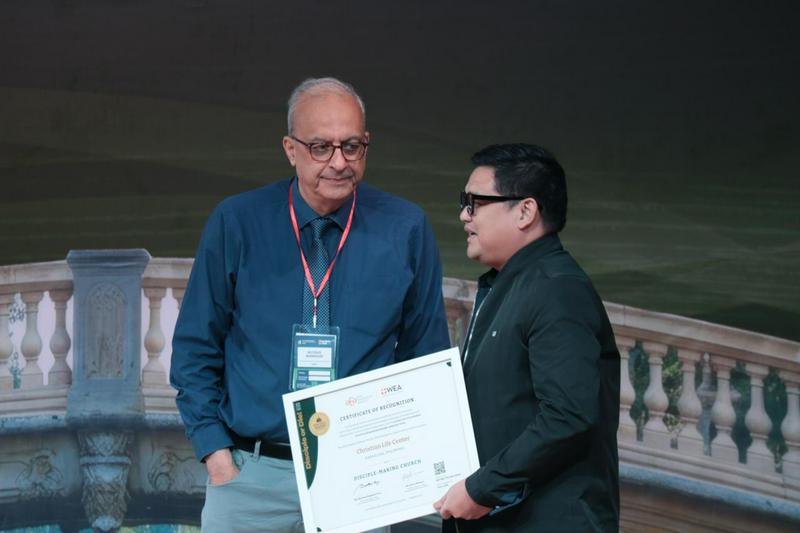
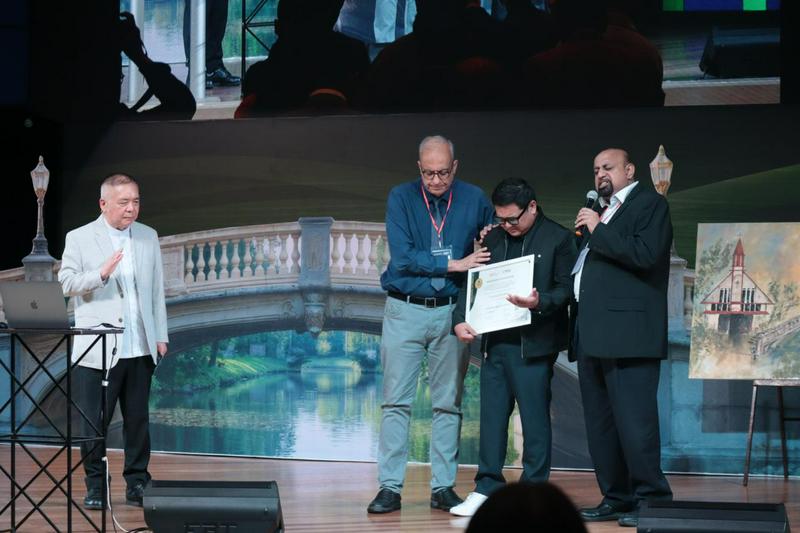
The session also included the recognition of a Philippine church movement associated with the late pastor Herley Montes, whose ministry shifted from an attendance-centered model to a disciple-making approach. Bishop Joel Montes, who has continued the ministry after his father's passing, received a certificate on behalf of the church movement. Botrus Mansour, secretary general of the WEA, presented the certificate, while Godfrey Yogarajah, chairman of the AEA and chair of the WEA International Council, prayed for Bishop Montes and the continuing legacy of the ministry.
At the close of the session, Tan invited participants to stand and commit their lives, churches, and evangelical alliances to the Lord. In his prayer, he asked that Asian church leaders would not be consumed only by immediate crises, but would recover the deeper urgency of the Great Commission through disciple-making rooted in daily abiding in Christ. He prayed that Christ's last command would become the church's priority, and that God would realign the structures, budgets, programs, and hearts of churches around the making of disciples.
He also prayed for unity and partnership across nations, organizations, denominations, and alliances, asking that Asian churches would move from being "rows of spectators" to "movements of spiritual multipliers." Looking toward 2033, the anticipated 2,000th anniversary of the Great Commission, Tan prayed for a great harvest and fruitfulness in disciple-making across Asia, concluding the session.