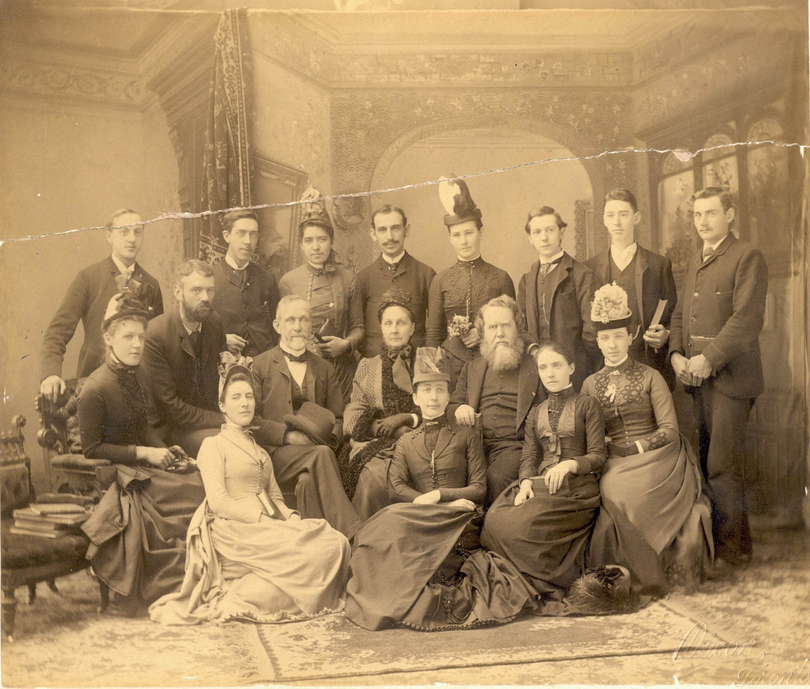
Since the arrival of Alopen in China in the Tang dynasty and continuing into the modern era, countless missionaries crossed oceans to bring the Christian faith to China, leaving lasting marks in education, healthcare, and social service. Yet missionary history has also intersected with colonial expansion and cultural conflict, making their legacy complex and multifaceted.
Today, how do Chinese Christians view this historical missionary presence?
In this article, several believers shared their perspectives and reflections.
Brother Zhang, a fellowship leader with more than two decades of ministry experience, sees missionaries as "pioneers of the gospel." In times of scarcity and hardship, they left their homes to plant roots in unfamiliar lands. Beyond proclaiming Scripture, they established schools and hospitals, addressing practical human needs with tangible care.
He emphasizes that many missionaries were not distant authorities preaching from above, but servants who stooped low to serve. Through a lifetime of sacrifice and dedication, they embodied faith in action—an example he believes is worthy of respect and emulation today.
Sister Li approaches the topic from a historical and scholarly lens. She notes that the missionary community was not monolithic. On one hand, many came with genuine zeal, bridging cultural divides and fostering exchange between China and the West. On the other hand, some missionary activities became entangled with the structures of modern colonialism, reflecting the limitations of their time. For example, the German Lutheran missionary Karl Gützlaff was a figure whose legacy remains controversial.
Li believes contemporary Christians should adopt a balanced perspective: affirm the dedication and service of missionaries while honestly confronting the complex historical realities, drawing lessons for today's faith practice.
Brother Wang, a young believer, shared how his own view has evolved. Initially, he admired missionaries almost idealistically. But as he studied church history more deeply, he recognized that missionaries were people shaped by their historical context, and their thinking and actions were inevitably constrained.
He observes that the faithfulness and pastoral concern missionaries demonstrated still carry relevance today. Yet the specific paths they followed cannot simply be copied; historical experiences are to be understood, not mechanically replicated—especially in today's context.
Sister Liu reflects on cultural engagement and cross-civilizational dialogue. She argues that mature missionary work is not a one-way export of culture but a two-way exchange. She cites Matteo Ricci, who set aside cultural prejudices, learned local languages and customs, and integrated into community life, conveying the core of the Gospel in ways that locals could understand. Such examples continue to offer valuable lessons for cross-cultural ministry today.
Taken together, these perspectives may suggest that they acknowledge the dedication and sacrifices of missionaries while confronting the historical complexities of evangelistic work. In their reflection, the key concern is how faith can be practiced responsibly and respectfully in the present social and cultural context.
(The article was originally published by the Gospel Times, and the author is a Christian in Fujian.)
- Edited by Poppy Chan