As global tensions deepen and Chinese churches spread across the world, many Christian leaders are asking how they can overcome misunderstanding, bridge divides, and build greater trust and cooperation. The World Chinese Christianity Alliance (WCA), founded in 2023, has set out to be exactly that kind of bridge. It is the first alliance within the World Evangelical Alliance (WEA) built around a shared ethnicity rather than a country or region.
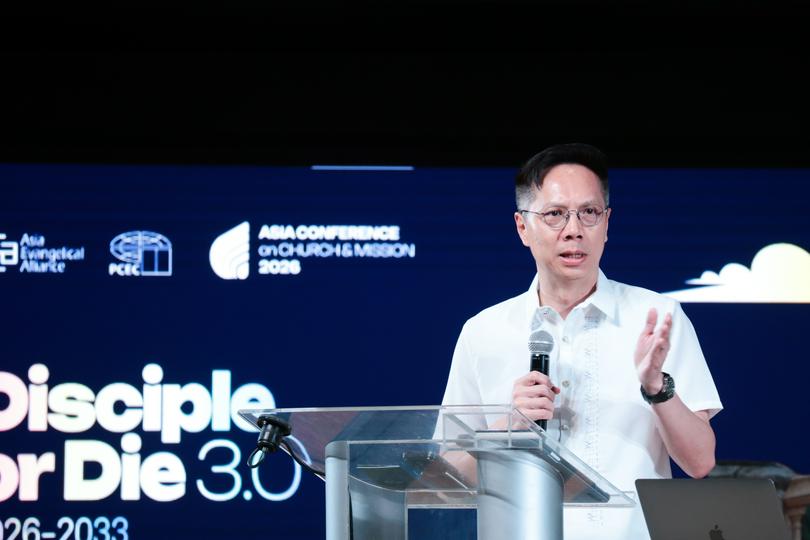
In June, during the Asia Conference on Church & Mission (ACCM) 2026, organized by the Asia Evangelical Alliance (AEA), WCA General Secretary the Rev. Ezekiel Tan spoke with China Christian Daily about WCA's vision, current priorities, and long-term plans. He also addressed several common misunderstandings of evangelical Christianity among churches in China, arguing that it needs to be explained more accurately and clearly.
According to WCA's official website, the alliance's vision is "to become a ministry platform for Chinese Christians worldwide, fulfilling the mission of making disciples of all nations through resource sharing and unity." WCA's work spans six areas — think tank, academic exchange, resources, publishing, training, and media — aimed at pooling resources from Chinese communities around the world in service of the Great Commission.
The year after WCA was founded, Tan, serving as WEA's special envoy to China and Chinese territories and as a member of the WEA International Council, organized and took part in an international delegation of WEA and WCA members that traveled to China. From July 20 to 24, 2024, the delegation visited Beijing, Nanjing, and Shanghai, meeting with China's Three-Self Patriotic Movement and China Christian Council, along with related organizations. WEA said the trip was meant to learn firsthand about the state of Christianity in China and to re-establish ties with leaders of the two bodies.
Tan has said publicly that he hopes WEA can take the lead in building goodwill and cooperation with China's two national Christian bodies. "We hope to be a bridge anchored by our faith in the region and beyond," he has said. How to actually play that bridging role among Chinese churches worldwide is a question WCA has kept wrestling with since its founding.
China Christian Daily: What are WCA's current priorities?
Ezekiel Tan: Our first priority is to promote and introduce WCA, the platform that sits within the WEA structure to serve Chinese communities. Chinese communities in many countries do not yet know much about WCA or its ministries. WEA is celebrating its 180th anniversary this year and is already well known in many countries and regions. By comparison, WCA is still a new platform. Therefore, the first thing we need to do is introduce WCA widely.
Our second priority is building up our infrastructure. Beyond our international office in Singapore, we're working to set up regional offices to help coordinate things like resource-sharing. We want to build a network that can serve the widest possible number of people with the fewest possible resources.
Our third priority is to strengthen WCA's representation. Drawing on Chinese cultural backgrounds, we hope to develop a Christian worldview with which Chinese Christians can more deeply identify.
Many people assume Christianity has been shaped mainly by Western culture. But today, roughly 70 percent of the world's Christians live in the Global South, even though the loudest voices still tend to come from institutions in the Global North.
Chinese communities are concentrated mainly in Asia but are also found throughout the world. I believe that if we can develop a Christian worldview that feels more genuinely our own, we'll be able to speak more effectively for Chinese Christian communities and articulate perspectives, ways of thinking, and positions rooted in our faith.
There's a lot more we could be doing, but these three things are where we're focused in the near term. If we get them right, I believe more groups will want to identify with WCA and get involved — and that will help drive this work of global unity forward.
China Christian Daily: Chinese Christians in China make up a large proportion of Chinese Christians worldwide. However, understandings of evangelical Christianity in China differ in some respects from those elsewhere in the world. What challenges does this create for WCA as it seeks to connect with churches in China?
Ezekiel Tan: First, WCA differs from other grassroots movements because we were established within the WEA structure. WEA began in Britain in 1846 and now has a history of 180 years. It has grown into a global network spanning many countries, and today it puts a growing emphasis on contextualization — supporting unity and cooperation among churches in ways suited to each country's own circumstances.
Unfortunately, because of media coverage and the influence of Donald Trump, many people have the impression that evangelicalism is shaped or led by the United States. Some even view Trump as a kind of "spiritual mentor" of evangelicals. I find this very awkward. I believe this is one of the greatest misunderstandings of evangelicalism. American evangelicals are only one part of the global evangelical community and cannot represent it as a whole.
So when we communicate with believers in China, we first need to explain clearly the origins of evangelicalism and our values. We value the contextual development of Christianity within different countries and cultural settings. This has much in common with the principles of self-governance, self-support, and self-propagation emphasized by China's Three-Self churches.
The second point that needs to be clarified is that evangelicalism is not a denomination. The Chinese translation of "evangelical" makes it easy to assume it refers to one particular denomination, but in English, "evangelical" carries no denominational meaning at all. It points to a Christian identity centered on the Bible and the gospel, essentially another word for Christian. In fact, if you were translating "evangelical" into Chinese, a word closer to "Christian" would actually be more accurate. But the standard Chinese term for "Christian" — 基督教(Jidujiao) — also covers Catholicism, so that word wasn't used. Instead, Chinese translators coined a separate term, 福音派 (fuyinpai), specifically for "evangelical."
If we can communicate more effectively and clarify these misunderstandings, I believe it will help us build relationships and cooperation with churches in China.
China Christian Daily: The ACCM addressed discipleship and the challenges of mission in the digital age. From WCA's perspective, what are your views on these issues?
Ezekiel Tan: I would like to begin with an analogy.
When I was growing up, we did not have mobile phones. Apart from seeing one another at home, parents and children had very few ways to communicate. Meaningful conversation usually happened face to face after children returned home from school. Even a phone call meant relying on a landline.
Today, with mobile phones, parents and kids can reach each other anytime, and parents can even follow their children's daily lives on social media. There are so many more tools and channels now. These tools can strengthen relationships, but they also have a negative side.
I use this example because many people hear the term "discipleship training" and assume it refers to a course or a training program. In the Bible, however, the heart of discipleship is relationship. Jesus spent three and a half years living closely with his disciples. He did not teach only through words but also through his example. They lived and worked together. This is how the lives of disciples were formed.
The word "training" can easily suggest a teacher-student model of instruction. Yet in traditional Chinese culture, people say, "A teacher for one day is a father for life." In the past, when someone learned a craft, the apprentice would live in the master's home and become part of the household. What was passed on was not merely a skill, but an entire way of life and a set of values.
What discipleship needs to recover, therefore, is a close, life-on-life relationship, together with shared values and close cooperation.
From this perspective, whether or not we live in a digital age, the essence of discipleship has not changed. Digital technology simply provides additional bridges and tools. It can strengthen family-like connections and cooperation among ministry partners. Therefore, I believe we need to recover a proper understanding of the essence of discipleship.
Today, many children focus only on their phones and do not communicate with their parents. Similar situations exist in the church. Many people focus only on playing games and live increasingly isolated lives. Yet the same tools can also be used to promote communication. As the Chinese saying goes, "Water can carry a boat, but it can also overturn it."
Ultimately, the church must first cultivate close relationships among brothers and sisters in Christ. They need shared values and a willingness to pass on values and skills through personal example, working together to build a family. This is what truly concerns us.
China Christian Daily: What are WCA's long-term ministry direction and plans?
Ezekiel Tan: In addition to the three current priorities I mentioned, I think about WCA's development in two stages.
Chinese communities are found throughout the world. At present, we are still beginning to establish contact with Chinese churches and communities in different countries. The first stage is about building cooperation at the national level.
Chinese communities are minorities in Africa, Latin America, and even Europe. Local evangelical alliances generally operate primarily in the country's main language. In the Philippines, for example, Filipino-speaking communities take the lead, while Chinese communities are a minority. In regions where Chinese people are not the majority, Chinese communities are often relatively marginalized. We hope to encourage them to establish their own national alliances and use these platforms to strengthen their cohesion.
Once localized organizations have been established, the second stage will be to promote closer regional cooperation and connect them with WCA's global network. Through this process, we hope that Chinese churches in different regions will receive greater recognition and better access to resources, while also gaining opportunities to participate in regional and global activities.
When national and regional platforms have been established, I hope to see diverse ministries flourishing. Chinese communities in different regions will be able to use these platforms to advance their own ideas, activities, and projects and to serve Chinese people worldwide. Resources and platforms will continue to grow like a snowball, becoming larger and more effective over time.