
Before departing, I searched online for information about Thailand. The keywords that appeared most often were "Buddhism," "temples," "elephants," and "durian." Yet as I kept searching, I began to encounter a very different Thailand: the "Golden Triangle," cyber scams, kidnappings, and drugs.
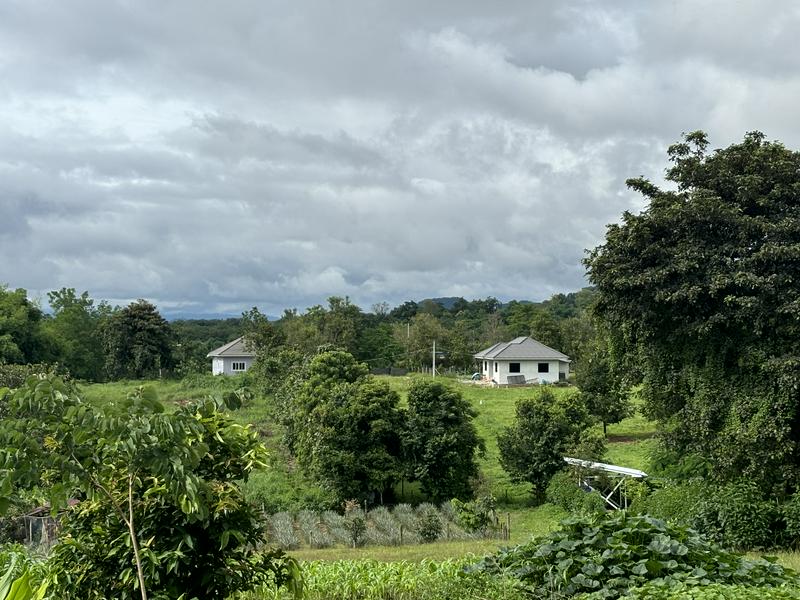
With these scattered impressions in mind, I traveled to Chiang Rai in northern Thailand, where I visited local churches and Christian ministries involved in drug rehabilitation, rural education, and outreach among mountain communities. It was only after stepping into these communities that I began to realize how limited my view of the country had been. Beyond the familiar images of saffron-robed monks and temples lies another Thailand, one seldom featured in tourist guides.
Rebuilding from the Ruins
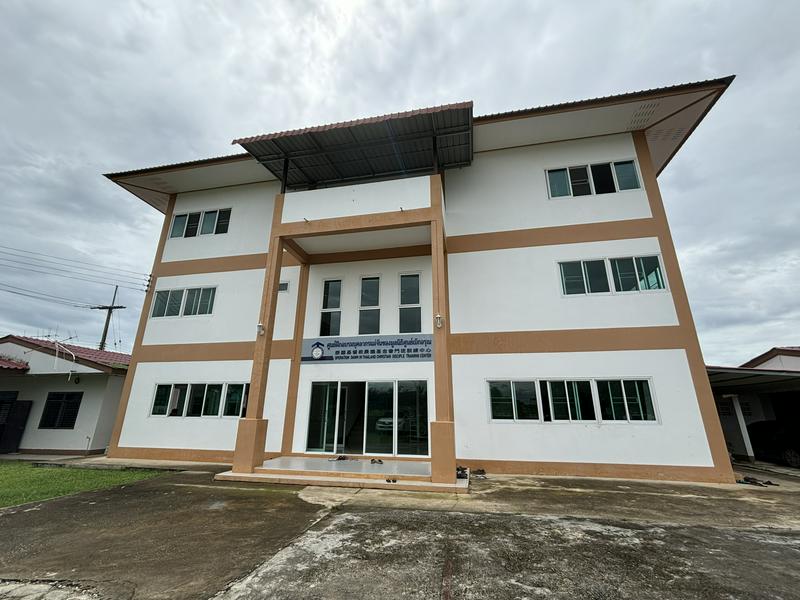
The Operation Dawn Rehabilitation Center in Chiang Rai, northern Thailand, has no barred windows, high walls, or strict confinement. Instead, it offers people struggling with addiction an opportunity to rebuild their lives through Christian faith, community, and a structured daily routine.
The center's founder, Pastor Andrew Liu, was once deeply addicted to heroin himself. At the age of 27, he left behind the life he describes as having "died once already." In response to God's calling, he chose to remain in northern Thailand, guided by these words: "When you have turned back, strengthen your brothers."
Pastor Huang Baohui also struggled with drug addiction in his youth. In his efforts to break free, he underwent treatment more than ten times. After finally overcoming his addiction, he chose to stay and serve. Twenty-five years later, he is still there.
Pastor Huang explained that when newcomers first arrive, they are not expected to do much beyond sleeping and eating. Yet this is often the most difficult stage, as their bodies endure the pain of withdrawal. When the pain becomes intense, staff members care for them through massage. After about two weeks, they begin to settle into a structured routine. Each day starts at 5:00 a.m., followed by morning devotions at six and a community gathering at seven. The rest of the day includes work assignments, lunch and rest, hand-copying passages of Scripture, cleaning duties, recreation such as basketball or chess, evening worship, and lights out at 9:30 p.m.
After about a year, those who complete the program and pass its assessments gradually move into roles of service, helping care for and mentor newer residents. Some choose to continue with discipleship training and theological studies, eventually becoming pastors or ministry workers themselves.
As we were talking, a sudden cry came from the back of the hall. Pastor Huang explained that one of the residents, a young man from Myanmar, has advanced colon cancer that is no longer operable. Although he is undergoing chemotherapy, the pain can be so severe that he sometimes cries out involuntarily.
Over the past 42 years, the center has helped people overcome addiction, some of whom have stayed on to help others recover. Fang Hao is one of them. He joined the rehabilitation center at thirty-seven and began discipleship training in his forties. Later, he married a woman he met while studying at a theological school. Today, they have a daughter who is nearly two years old. Standing beside Pastor Huang, with thick hair, sun-darkened skin, and a sturdy build, Fang smiled as he shared a saying often heard at Dawn: "Anyone who comes here ends up gaining weight."
The center defines success as remaining free from drugs, alcohol, and tobacco for more than three years after completing rehabilitation. By Pastor Huang's rough estimate, about 40 percent of participants achieve that outcome. "Addiction recovery is ultimately a matter of life," he said. "It is a battle with Satan for the soul."
Nurturing a Child in a Pineapple Field
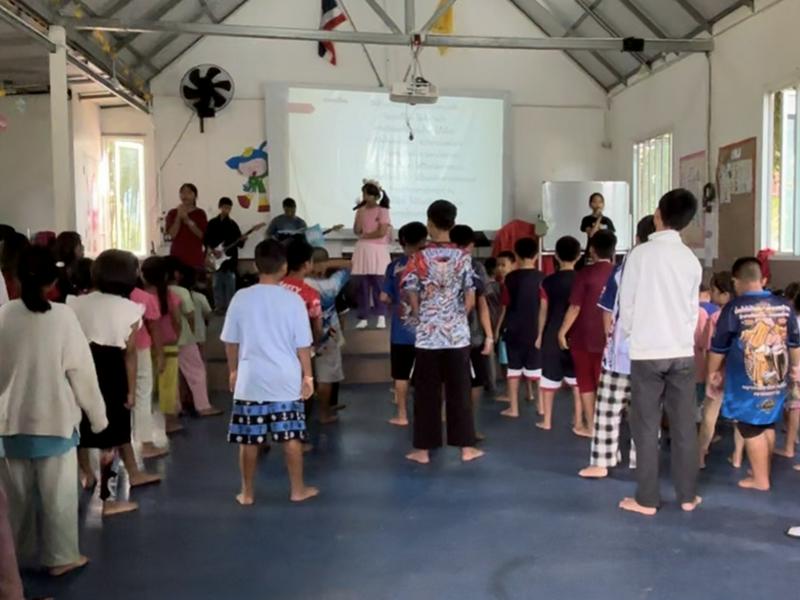
Nearly 200 ethnic Dai children who have fled Myanmar are living in the mountain villages of northern Thailand without legal status. Some come from single-parent families, while others are orphans.
Brother He Chaomin is a lean, dark-skinned 52-year-old who miraculously survived liver cancer two years ago. Surrounded by pineapple fields, he built a small home for himself, hoping to live a quiet life.
One Christmas five years ago, he invited nearby villagers to his home for a meal and an evening of singing. During the gathering, someone casually asked, "Could you teach our children Chinese?"
He had no experience teaching children, but he opened his doors anyway and welcomed five students. To his surprise, more and more children began to arrive. What started as a few informal lessons eventually grew into the Pineapple Field Chinese School.
Every day, He drives his pickup truck to pick up and drop off the children. At noon, everyone gathers around a communal meal. His wife, a Christian minister, wanted to help teach Chinese as well. To prepare herself, she first learned the language online before passing it on to the children. Together, they also teach music, gardening, herbal balm making, and practical skills for earning a livelihood.
In late July, a fourteen-year-old girl suffered a heart attack and was rushed to the hospital. Doctors said she would need surgery within six months, at a cost of more than 200,000 Thai baht. Four years earlier, her mother had remarried and left her in He's care, never to return. Without a Thai identification card, she has no access to medical insurance. He himself is raising a daughter with autism, yet he chose to take this child in as well.
To help children like her, He went through a long and complicated process to register the Noah Chiang Rai Foundation. He spends much of his time helping children enroll in local public schools, sometimes simply so they can obtain a student identification number.
On August 16 this year, through a special authorization, he and his team brought thirty-nine children to take a Chinese proficiency examination at a local Confucius Institute.
Pastor Qi, who has known He for many years and serves as vice chairman of the foundation, reflected on his commitment: "He provides transportation free of charge, never asks for a penny, and faces constant pressure from both government authorities and the local community. No wonder he never manages to gain weight."
While in northern Thailand, I visited other schools and childcare centers as well. I also met people who are supporting local children through Chinese language education.
Preparing a Resting Place Among the Hills
Pastor Lai has been serving in the area for thirteen years. He told us that many ethnic minorities and descendants of Yunnanese settlers face a difficult choice. If they leave their traditional religions and follow Christ, they may be shunned by their entire village.
In addition, many people place great importance on burial and find cremation difficult to accept, sometimes even viewing it as a severe curse. In response to these realities, the Futai Foundation began doing something that may sound unusual: purchasing land for cemeteries.
To acquire cemetery land, the 53-year-old pastor chose not to launch fundraising campaigns through his sending church or rely on outside support. Instead, he insisted on starting with the local churches. "God's work will never lack His provision," he said. The believers in these churches, many of them Lahu, Akha, Lisu, or descendants of Yunnanese settlers, are not wealthy. Yet when the offering bag was passed around, it often contained 100- and 150-baht notes, gifts worth only a few U.S. dollars.
Later, I heard a similar story in an Akha church. Missionary Zhang explained that when people consider becoming Christians and joining a church, one practical question often arises: Does the church have a cemetery? If it does not, some will choose to attend another congregation that does.
The challenge is that the surrounding terrain is steep and mountainous. Establishing a cemetery requires excavators to level sections of the hillside and prepare burial plots. Zhang told me that he once visited Hong Kong and learned that many churches, schools, and hospitals there stand on land purchased by missionaries decades earlier. Even after half a century or more, those properties continue to serve their communities.
"If those missionaries had not had that vision," he reflected, "many of these ministries would not exist today." For that reason, he hopes to leave something for the future of his own church as well.
Why I Didn't Visit the White Temple
On the final day of my journey, I visited two temples. Inside the meticulously designed Baan Dam (Black House Museum), tourists posed for photographs among displays of crocodile skins, snake hides, wolf heads, animal bones, coins, and other curiosities. At the Blue Temple, groups of visitors lit incense and bowed before towering Buddhist statues.
In the end, I decided not to visit the famous White Temple. By then, what had left the deepest impression on me was not Thailand's famous temples, but the people I had met.
The people who sweep the floors of a rehabilitation center day after day;
The people who teach children without citizenship papers to sing and play music
The people who prepare a resting place among the hills for believers...
- Translated by June C.