Long before England became a Christian nation, long before many of Europe's great churches were built, the Gospel had already travelled east along the Silk Road and found a home in China.
When I think about the history of Christianity in China, I do not see a distant church. I see part of my own family's story.
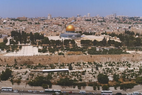
I write as a Palestinian Christian, a member of one of the world's oldest Christian communities, worshipping in the land where Jesus Christ was born, preached, was crucified, and rose again. Our churches have remained in Jerusalem, Bethlehem, Nazareth, Gaza, and throughout the Holy Land through centuries of change, carrying forward a living Christian witness in the very places where the story of our faith began.
From the lands surrounding Jerusalem, Antioch, Mesopotamia, and Persia, believers carried the Gospel far beyond the borders of their own lands, crossing deserts and mountains until it reached China. This happened centuries before Christianity became firmly established in much of Europe.
The Xi'an Stele, erected in the year 781, records that journey in stone. It describes Christian communities that had already flourished in China for generations by that point, planted through the witness of believers who travelled the trade routes connecting the Middle East to China. When I read the words carved on that ancient monument, I am reminded that the relationship between the churches of the Holy Land and the churches of China is not something new. It reaches back nearly fourteen centuries, to a time when a Christian worshipper in Chang'an and a Christian worshipper in Jerusalem could read the same Scriptures in different languages and know they belonged to the same family of faith.
That shared history gives special meaning to a decision recently taken by the Church of England.
The General Synod voted to engage formally with Kairos Palestine II, a document prepared by Palestinian Christians describing our lived experience in Bethlehem, Gaza, Ramallah, and Jerusalem, our longing for justice, and our commitment to peace and reconciliation through the Gospel of Jesus Christ.
The decision has been welcomed by many and criticised by others, as often happens when a church addresses a painful and complicated reality. But I believe something deeper took place. The Church of England did not claim to solve one of the world's most difficult conflicts. It did something simpler and, in my view, something profoundly Christian. It chose to listen.
Listening is one of the most powerful expressions of Christian love. Throughout the Gospels, Jesus turned toward those whose voices were ignored, listening before he taught them, healed them, or restored them. A church cannot carry one another's burdens if it refuses to hear one another's stories.
For Palestinian Christians, that willingness to listen carries real meaning. Too often our community is spoken about rather than spoken with. We are discussed in political debates while our witness as followers of Christ goes unheard. We are not asking the global Church to solve every political question or provide every answer. We are asking our brothers and sisters in Christ to hear our testimony, pray with us, and walk alongside us as members of the same body of Christ.
I believe Chinese Christians understand this call to perseverance deeply.
The Church in China has never been defined merely by numbers, remarkable as those numbers are. It has been defined by faithfulness. Across generations, millions of Chinese believers have nurtured vibrant Christian communities in cities like Shanghai and Wenzhou, and in villages far from any city at all, holding firmly to Christ through long seasons of change. Their witness has quietly encouraged Christians well beyond China's borders.
Palestinian Christians are a small community living where Christianity began. Chinese Christians are a minority within one of the world's oldest civilizations. Neither community has depended on political power to sustain its faith. Both have learned instead that the Church grows through faithful witness, humble service, and confidence in the promises of God, even when the surrounding world pays little attention.
We also share something deeper. The Church of Jerusalem gave the world the Gospel, and the Church in China shows the world that the Gospel belongs to every nation, preserving in one place where the Christian story began and proving in the other how that same story continues to bear fruit across cultures and centuries. Together they remind the world that the Church is larger than any nation or political circumstance.
For this reason, I warmly welcome the decision of the Church of England. Its resolution does not claim to hold every answer. It reflects a willingness to hear the voices of fellow believers whose roots reach back to the earliest days of Christianity, and that humility deserves respect.
My hope is that churches across China, whether Catholic, Protestant, Orthodox, Evangelical, or from other Christian communities rooted in China's long and diverse Christian history, will take time to engage with Kairos Palestine II, listen to the testimony of Palestinian Christians for themselves, and prayerfully consider how they might respond as members of the same body of Christ.
The Gospel first travelled from the lands surrounding Jerusalem to China through believers who crossed continents carrying little more than faith and endurance. Those same churches remain connected today by the same Lord, the same Scriptures, and the same baptism. The distance between Jerusalem and Xi'an can be measured in thousands of kilometres, but the distance between brothers and sisters in Christ was never meant to be measured at all.
The first believers who carried the Gospel eastward could never have imagined that centuries later, millions of Chinese Christians would worship the same Lord in a civilization thousands of miles from Jerusalem. That is the beauty of the Church. We are separated by geography, language, and history, yet held together by Christ alone.
May the vine first planted in Jerusalem continue to flourish in China for generations to come, and may the ancient churches of the Holy Land and the growing churches of China keep learning from one another, praying for one another, and encouraging one another as one family in the Lord.
Jack Nassar is a Palestinian Christian writer focusing on the Palestine-Israel conflict and its social, political and religious dimensions. He holds a master of arts degree in political communications from Goldsmiths University of London. He can be reached at: jacknassar@aol.com